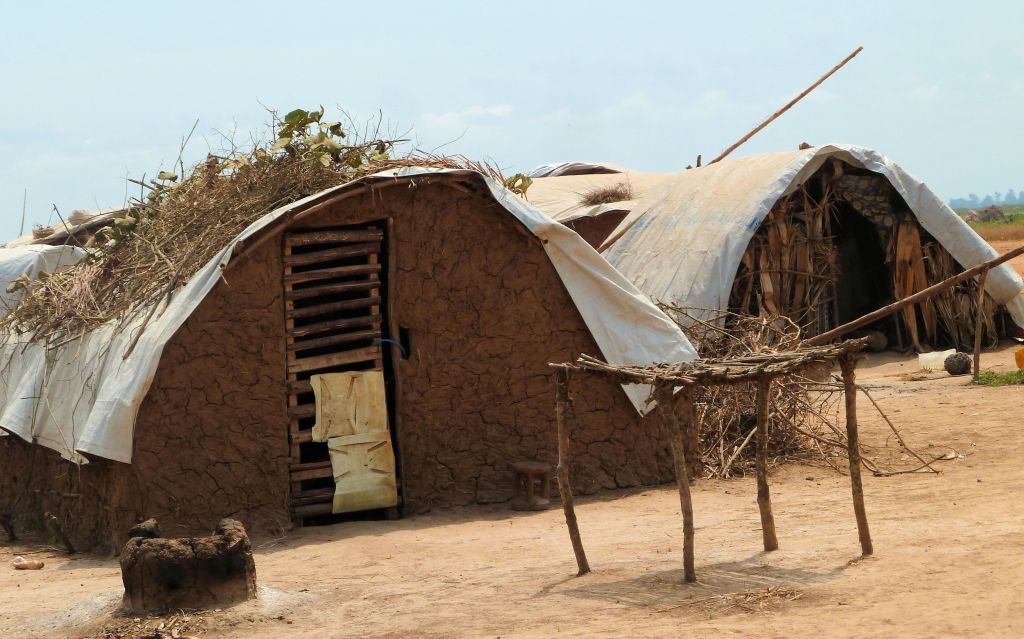
During our recent trip to Uganda, our friend Fred Mawanda took us to the Sango Bay refugee camp, 74 kilometres from Masaka in south-west Uganda. This camp has the largest number of refugees in the country – from the Congo, Rwanda, Burundi, South Sudan and northern Tanzania. There are up to 5500 refugees from war-torn neighbouring countries but also those whose great grandparents migrated to Tanzania in the 1960s but were expelled in a two-week ultimatum issued by Tanzania.
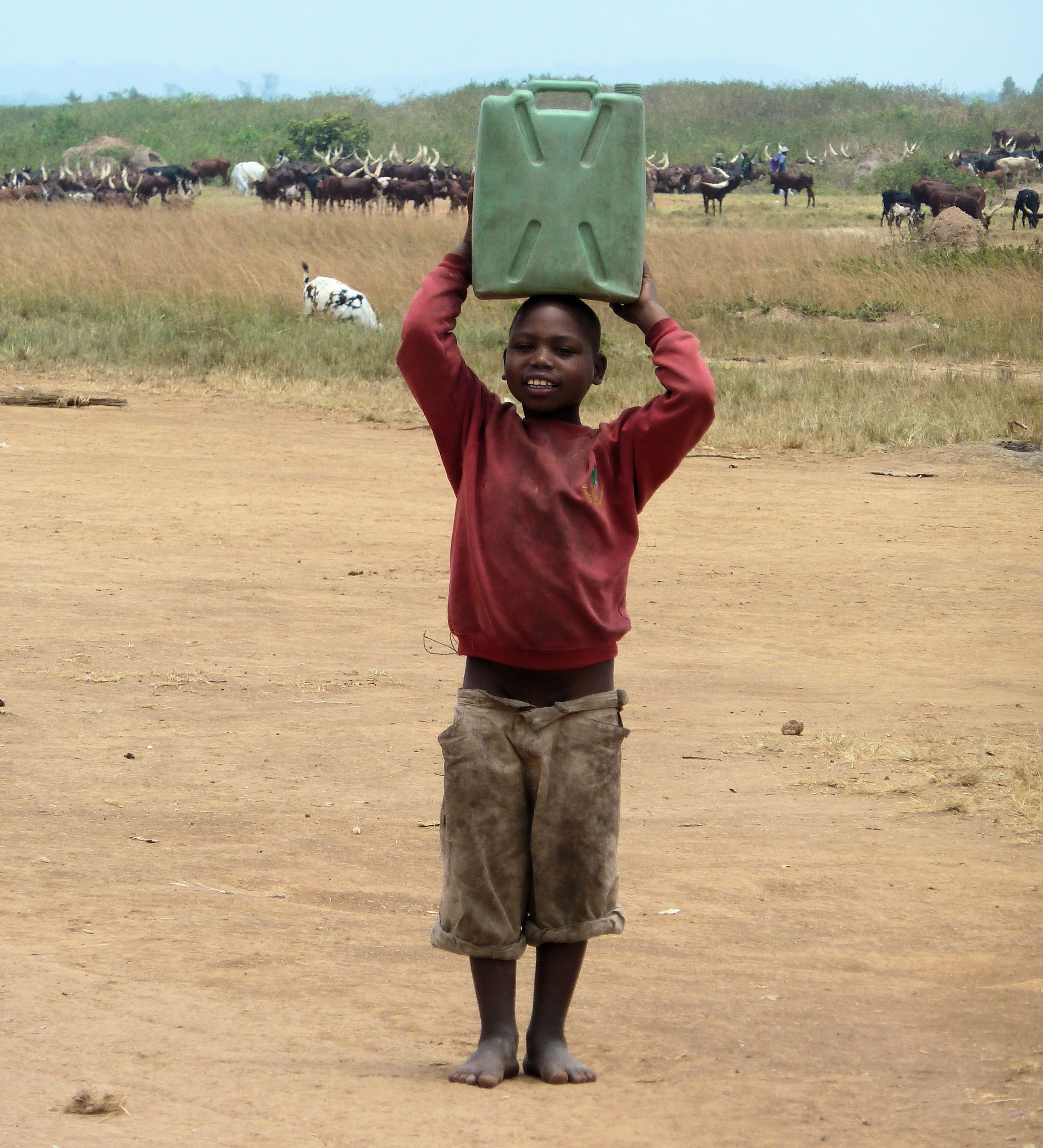
They live on bare ground, with little food and the scantiest of shelter from the elements. They have nothing they can call their own apart from clothes and as there is no running water, those clothes, particularly those of the children, are rarely able to be washed. The water they do have access to is shared with a herd of cattle. They are provided with 3 kg of maize flour for a family for a month. Diseases of all kinds from HIV to malaria and diarrhoea are rampant. In Fred’s words: ‘They live in the worst human conditions I have witnessed, and mind you, living in Africa, I have witnessed a lot.
Fred’s journey to Sango Bay began with an email and a plea for help and I shall let Fred tell that story here:
At the beginning of 2014, I was asked to go to Kampala to find a group of six refugee children, five girls and one boy. All of them had experienced untold trauma, which to this day makes me ask how human beings can become so hostile to each other. I found them through a telephone contact given to me in an email from a refugee in Australia. These children were living in one room, on one mattress in a slum in Kampala. I felt that the Lord was leading me to discover the plight of refugees!!! Up until then I only thought about the world level discussions about refugees in Australia and Italy. A few days later as I sat at the Childcare centre, a Pentecostal Danish pastor talked to me and asked me if I knew anything about the Sango Bay refugee camp, and I knew nothing, but he left me a challenge in a statement: “If we Christians, cannot help our brothers and sisters in the refugee camp – then our Christianity is nothing”.
I immediately followed through to go and visit and see; Jesus said “come and see”. I saw the worst human disaster experience of my life. I came home and could hardly sleep. A week later we emptied our suitcases of clothes, got whatever we could get in terms of food, and took it to the camp.
We started with a message of hope and prayer because as Pope Benedict said in Charity in Truth, “if you give aid/charity and don’t give God, you have given too little”. After we distributed the food and clothes, we saw fighting breaking out – as there was too little for too many. Ever since, my community, the Holy Trinity Community and NET Ministries have organized faith experience events to encourage the people there with the message of the gospel, but as on one event – one leader in the camp told us before a tent packed with about 300 people, “it is true we need God, but after feeding our souls, we have hope but our stomachs and bodies have real hunger for food”.

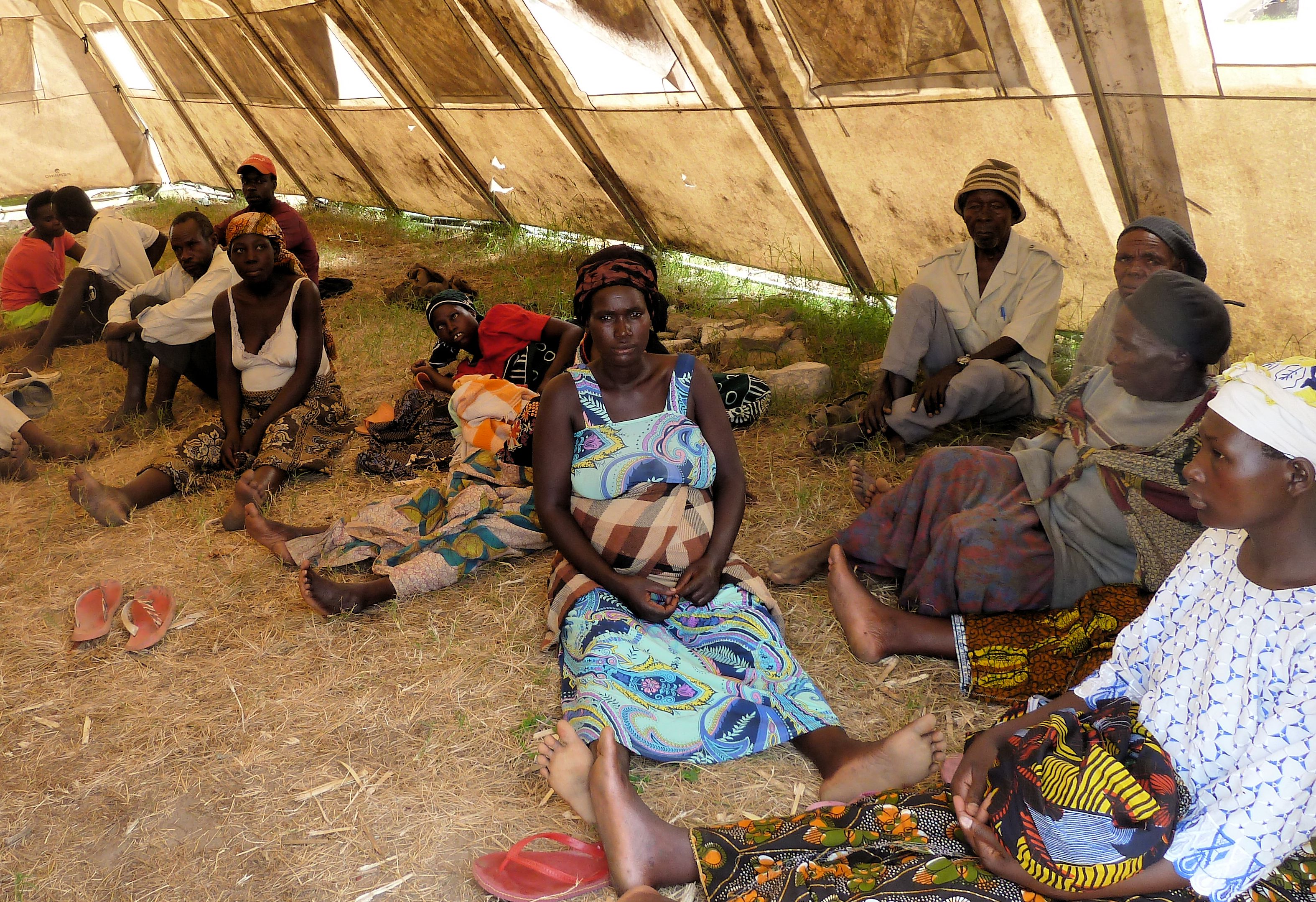
So when Fred asked if we would go with him to the camp, our first thought was what could we do, what could we take? Of course the answer was food and we bought 40 kg of maize flour and two cartons of long-life milk, and Fred provided more clothes. The guards selected a representative from each of 20 families and they gathered to meet us – the old, the HIV positive, mothers with babies, and pregnant women.

The youngest in the group was three days old. We asked the guards about the birthing conditions for these mothers, and were told that they are taken, on the back of a motor bike – a boda boda – to a government clinic 11 kilometres away. If they go into labour at night, however, they remain in the camp and ‘improvise’.
We were told that a huge problem for the babies is the inability of their malnourished mothers to feed them. They are then given cows’ milk which they cannot digest and does not contain the nutrients they need. I was determined on my return home to try to raise funds to provide them with Formula but was reminded that, under the conditions they are living in, this is not feasible. So other avenues must be explored.
As we distributed the food and clothing it was heartbreakingly obvious that we were just scratching the surface. It was indeed too little, for too many! But there was hope as well. The United Nations Children’s fund, UNICEF, sponsors a school there, and each day 300 children gather to learn and grow. UNICEF only funds the school so they have no lunch but their hunger for education, the key to their futures, sustains them.

And now I ponder the possibility of finding beauty in these devastating circumstances. Where was the beauty in Sango Bay? At a farewell dinner the night before we flew home, Fred asked me what were the highlights and lowlights of our visit. I had no hesitation in identifying the low – Sango Bay refugee camp was the most confronting experience of my life, and the memory of this human misery will stay with me forever. In a curious way however, I also identified it as a highlight.

As I remember that conversation, I find the beauty at Sango Bay: it was in the generosity of Fred and his communities who took up the challenge to live their faith; in the gratitude of the refugees and their invitations to us to visit their ‘homes’; in the teachers who volunteer their time to work with the children; in the pleasure the children received when we gave them new school supplies; and in the generosity of a local business here at home, so moved by our stories and photos, that they have begun raising funds to send to Fred.
Now back in affluent Australia, I struggle with a feeling of powerlessness in the face of these people’s pain and my inability to do anything about it. Then I recall the statement from the NET Ministries’ website:
We are a people who yearn to be remembered … for we are a people
And that is how I can help them – by telling their story to all who will listen. I realise that the more I tell that story, the more they will become a people, loved children of God, not just forgotten refugee statistics.


 Annie Rooney Blog
Leave a comment